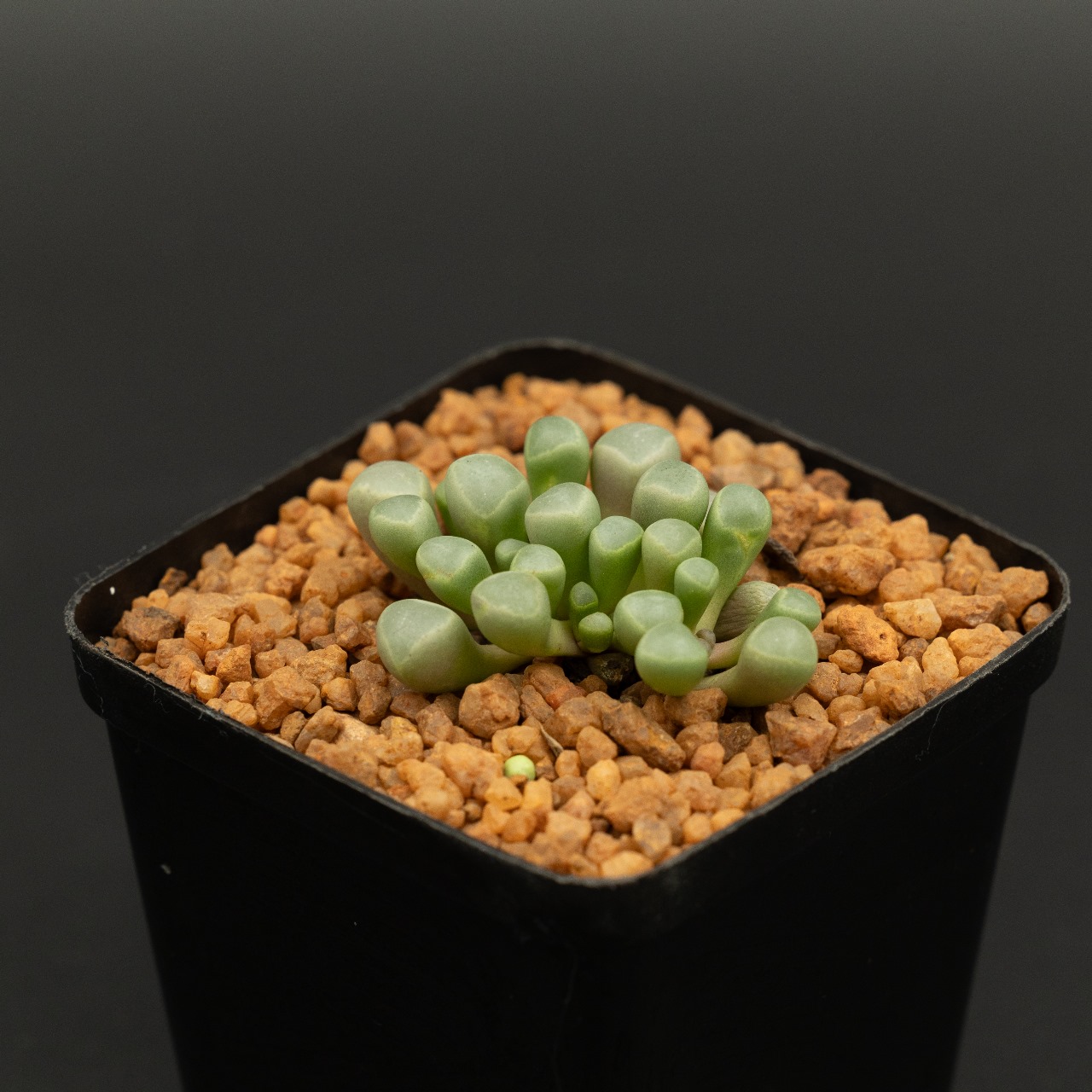
Fenestraria rhopalophylla, also known as Baby Toes, is a captivating succulent from the Aizoaceae family, prized for its unique, finger-like leaves that resemble tiny, translucent “toes” poking out of the soil. Native to the arid regions of South Africa, this drought-tolerant plant thrives in well-drained soil and full sunlight, making it an excellent choice for rock gardens, containers, or as a feature plant in succulent arrangements. Its leaves are partially translucent at the tips, allowing sunlight to penetrate and help the plant photosynthesize, which is a rare adaptation. In late fall and winter, Fenestraria rhopalophylla produces small, daisy-like yellow flowers, adding a vibrant contrast to its quirky, low-growing form. With its easy-care nature and distinctive appearance, Baby Toes is a must-have for succulent collectors!
R59,00
Fenestraria rhopalophylla - Baby Toes
Fenestraria rhopalophylla, commonly known as "Baby Toes," is a fascinating succulent species from the Aizoaceae family, named for its unusual leaf structure that resembles tiny, fleshy toes. This plant is highly adapted to desert life, showing remarkable adaptations to harsh sunlight and scarce water. Baby Toes are particularly loved by succulent enthusiasts for their unique appearance and relatively easy care requirements.
Common Characteristics
- Leaf Structure: The plant’s leaves are cylindrical, plump, and translucent at the tips, giving them the appearance of small “windows” or “fenestrations.” These windows allow light to penetrate deeper into the leaf, enabling photosynthesis while minimizing water loss.
- Growth Habit: Fenestraria rhopalophylla grows in clumps of “toes” or columns, forming a mat-like structure as it spreads slowly over time.
- Flowers: This species produces daisy-like flowers, typically white or yellow, that emerge in fall or winter. The flowers can grow up to 2 inches in diameter, providing a beautiful contrast to the plant’s compact, green structure.
Native Habitat and Origins
Baby Toes are native to the arid regions of southern Namibia and South Africa. In their natural habitat, they grow partially buried in sand with only their “windows” exposed to light. This adaptation protects them from extreme temperatures and water loss while still allowing for photosynthesis.
Care Guide for Fenestraria rhopalophylla
Though they may look delicate, Baby Toes are relatively hardy and easy to care for if their needs are met. Mimicking their native desert environment is key to keeping them healthy.
- Soil: Plant in a well-draining succulent or cactus mix. A mix with sand or pumice is ideal to prevent water from sitting at the roots, which can lead to rot.
- Watering: Water sparingly and allow the soil to dry out completely between waterings. During the growing season (spring and fall), water once every 2-3 weeks, while in winter, reduce watering further. Avoid overwatering, as this can cause the leaves to split or rot.
- Light: Provide bright, indirect light. A sunny windowsill is often sufficient, though they can handle some direct sunlight in cooler climates. Too much intense sunlight can cause the leaves to dry out or “sunburn.”
- Temperature and Humidity: This plant thrives in warm, dry conditions and prefers temperatures between 65–80°F (18–27°C). Protect from frost, as it is not cold-hardy.
- Fertilization: Apply a diluted, balanced succulent fertilizer during the growing season, about once per month. Avoid fertilizing in the winter months.
Unique Feature: Translucent Leaf Windows
The most unique and special characteristic of Fenestraria rhopalophylla is its translucent “windows” at the tips of its leaves. These windows are an adaptation to intense sunlight in desert habitats. By allowing light to penetrate directly into the leaf interior, the windows enable photosynthesis with minimal water loss. This translucent adaptation is a remarkable survival strategy that not only sets Fenestraria apart visually but also highlights the incredible resilience and ingenuity of desert plants.
Additional information
| Weight | 250 g |
|---|---|
| Dimensions | 10 × 10 × 12 cm |
Reviews
There are no reviews yet.