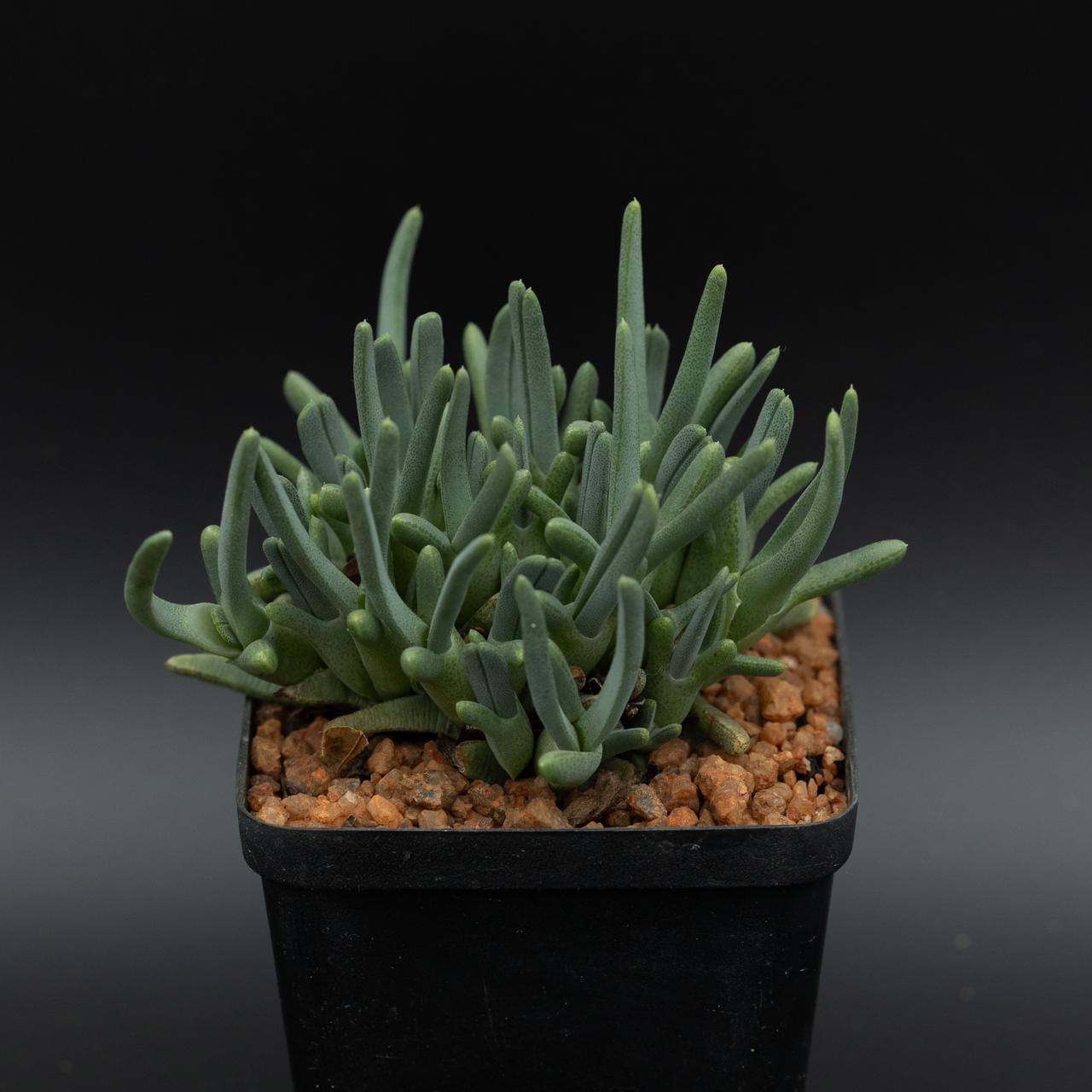
Cheiridopsis namaquensis is a rare and striking succulent from the Aizoaceae family, admired for its thick, blue-green, finger-like leaves covered in a fine, powdery coating that helps it withstand harsh desert conditions. Native to the arid regions of Namibia and South Africa, this drought-tolerant plant thrives in well-drained soil and full sun, making it an easy-care addition to any succulent collection. During the cooler months, it produces large, bright yellow to orange, daisy-like flowers that open in the afternoon, adding a vibrant splash of color. With its unique, clumping growth habit and stunning blooms, Cheiridopsis namaquensis is a must-have for collectors looking for an exotic and resilient succulent!
R49,00
Cheiridopsis namaquensis - The Namaqualand Mesemb
Cheiridopsis namaquensis, a charming succulent from the Aizoaceae family, is a captivating plant known for its unique leaf structure and bright flowers. With its intriguing growth habit and bold winter blooms, this species adds character to succulent collections, particularly those focused on rare or unique desert plants.
Common Characteristics
- Paired Leaves: C. namaquensis is known for its unusual paired leaves, which grow in opposite sets. Each pair has thick, smooth, fleshy leaves that are usually blue-green and triangular in shape. These leaf pairs help store water and protect the plant from harsh sunlight.
- Seasonal Leaf Sheath: After each growing season, older leaves dry up and form a sheath around the plant’s base, protecting it from dehydration and intense sun during the dormant season.
- Bright Yellow Flowers: In winter, C. namaquensis produces showy, daisy-like flowers in vibrant shades of yellow. These blooms add a burst of color, opening during the day and closing at night.
- Compact Growth Habit: This species has a low, spreading growth habit, staying close to the ground and forming small clumps over time.
Native Habitat and Origins
Cheiridopsis namaquensis is native to the Namaqualand region of South Africa, a semi-desert area known for its unique flora and rich biodiversity. The region has intense sunlight, limited rainfall, and coarse, fast-draining soils, which have shaped C. namaquensis into a highly drought-tolerant plant well adapted to harsh conditions.
Care Guide for Cheiridopsis namaquensis
With proper care, C. namaquensis can thrive indoors or outdoors, making it a rewarding addition for those interested in rare succulents:
- Soil: Use a well-draining cactus or succulent mix, ideally with added sand or pumice to increase drainage and mimic the rocky terrain of its native habitat.
- Watering: Water sparingly, allowing the soil to dry out completely between waterings. During the winter growing season, water every few weeks. Reduce watering significantly during the dormant summer period.
- Light: This species prefers full sun to partial shade. It thrives in bright, direct sunlight but can tolerate partial shade, especially in hotter climates.
- Temperature: While C. namaquensis can tolerate light frost, it prefers temperatures above 40°F (4°C). If grown in colder climates, it should be brought indoors before frost or grown in a protected area.
- Fertilization: Apply a diluted, balanced fertilizer once in early winter to support growth and blooming.
A Unique Feature: “Leaf Sheathing” Adaptation
One of the most unique aspects of Cheiridopsis namaquensis is its adaptation of forming a protective sheath around its base. At the end of each growing season, older leaves dry and enclose the plant, providing an insulating layer that helps retain moisture and protect it from extreme temperatures. This adaptation allows C. namaquensis to endure some of the toughest desert conditions, making it an exceptional example of nature’s ingenuity in arid survival. This feature also gives the plant an unusual appearance, adding to its appeal in succulent collections.
Additional information
| Weight | 50 g |
|---|---|
| Dimensions | 8 × 8 × 8 cm |
Reviews
There are no reviews yet.