
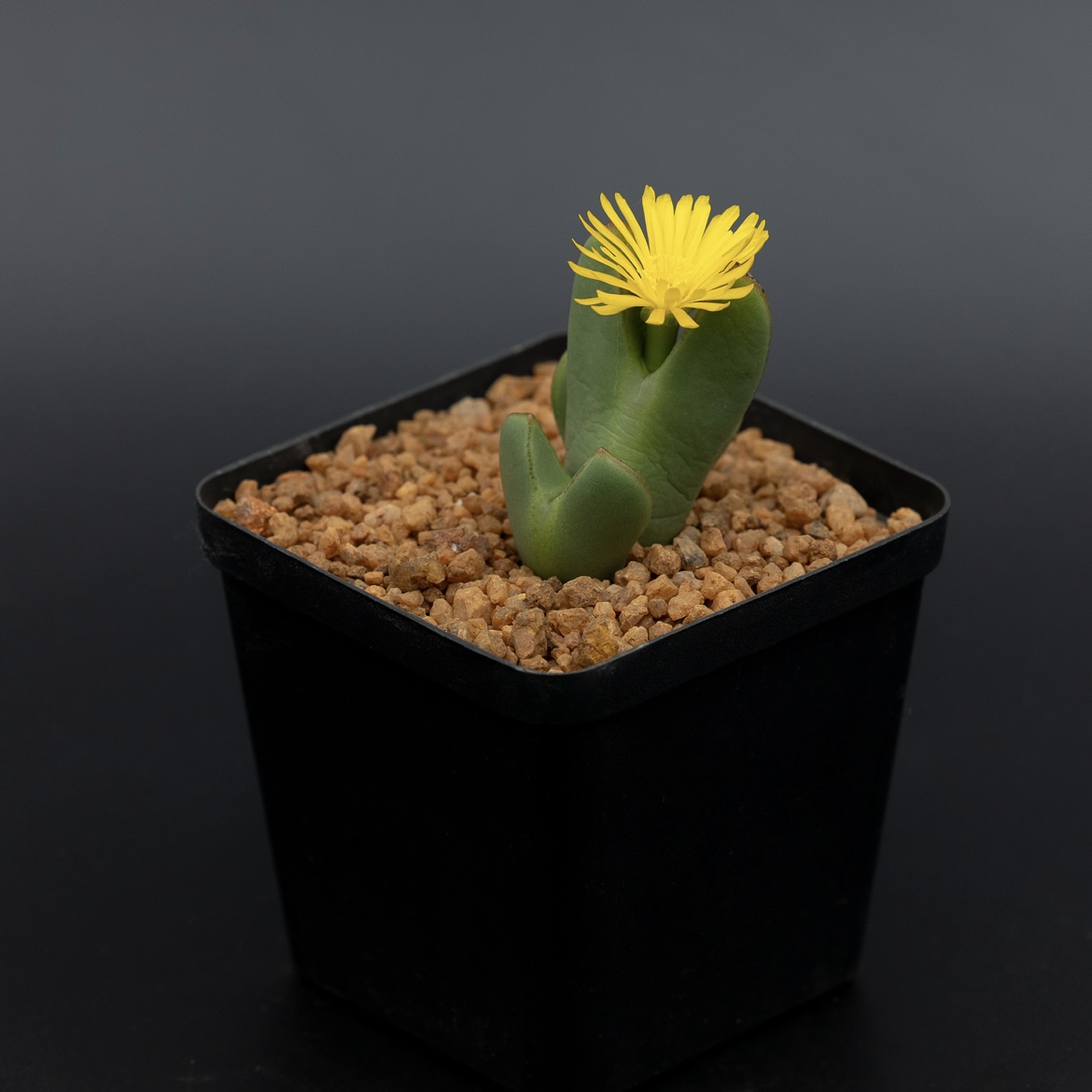
Conophytum bilobum is a fascinating and compact succulent from the Aizoaceae family, prized for its unique, bilobed (split) leaves that resemble tiny, green heart-shaped stones. Native to the arid regions of South Africa, this drought-tolerant plant thrives in well-drained soil and bright, indirect light, making it perfect for collectors and low-maintenance plant lovers. In autumn, it produces striking, daisy-like yellow to orange flowers with a sweet fragrance, adding a burst of color to its sculptural form. Conophytum bilobum enters a summer dormancy phase, making it an intriguing and seasonal beauty. Its rare, living-stone appearance and easy-care nature make it a standout addition to any succulent collection!
R55,00
Conophytum bilobum - The Two-Lobed Conophytum
Conophytum bilobum is a charming and unusual succulent in the Aizoaceae family, prized for its distinctive two-lobed shape and vivid autumn blooms. This species, often called the “Two-Lobed Conophytum,” is popular among collectors for its unique appearance and compact growth habit, making it ideal for small gardens or container displays.
Common Characteristics
- Paired, Bilobed Leaves: C. bilobum is known for its thick, fleshy leaves, which grow in pairs and are fused at the base, forming a two-lobed, heart-like shape. These paired leaves are typically a soft green with a smooth texture.
- Colorful Autumn Blooms: In autumn, C. bilobum produces small, daisy-like flowers in shades of bright yellow, pink, or orange. These blooms are often scented and open during the day, adding a splash of color.
- Compact Growth: The plant grows low to the ground, forming small clusters of leaves. Over time, these clusters expand to form a mat, making it an attractive ground cover in desert gardens or rockeries.
- Dormancy Sheath: During the summer dormant period, the old leaves dry up and form a papery sheath around the plant, which protects it from intense heat and sun.
Native Habitat and Origins
Conophytum bilobum is native to the arid regions of South Africa and Namibia, particularly in the Namaqualand desert. These areas are known for their extreme temperatures, sandy soils, and minimal rainfall, with many succulent species adapted to survive long dry periods.
Care Guide for Conophytum bilobum
With a few simple care practices, C. bilobum can thrive both indoors and outdoors in sunny, dry conditions:
- Soil: Use a well-draining cactus or succulent mix with added sand or grit for optimal drainage. Avoid soils that retain moisture.
- Watering: Water very sparingly, especially during the summer dormancy. Start watering lightly in early autumn as new growth appears, and then water every few weeks during the active season (fall to spring). Ensure soil is completely dry between waterings.
- Light: This species prefers bright, indirect sunlight. It can tolerate some direct sun, but too much exposure may scorch the leaves. Indoors, place it near a bright window or use grow lights.
- Temperature: C. bilobum prefers mild temperatures and is sensitive to frost. It does best at temperatures above 40°F (4°C), so in cooler climates, bring it indoors before frost.
- Fertilization: Fertilize with a diluted cactus or succulent fertilizer once in autumn when it begins its active growing period to encourage healthy growth and blooming.
A Unique Feature: The “Living Stone” Aesthetic
One of the most fascinating aspects of Conophytum bilobum is its “living stone” appearance. The plant's leaves blend seamlessly with the rocky environments of its native habitat, providing camouflage that protects it from herbivores and extreme sun. The two-lobed shape not only gives the plant its name but also makes it resemble a small stone, making it a conversation starter and a favorite among collectors of unusual succulents. This unique adaptation, combined with its seasonal autumn blooms, makes C. bilobum both an attractive and resilient addition to any collection.
Additional information
| Weight | 50 g |
|---|---|
| Dimensions | 8 × 8 × 8 cm |
Reviews
There are no reviews yet.