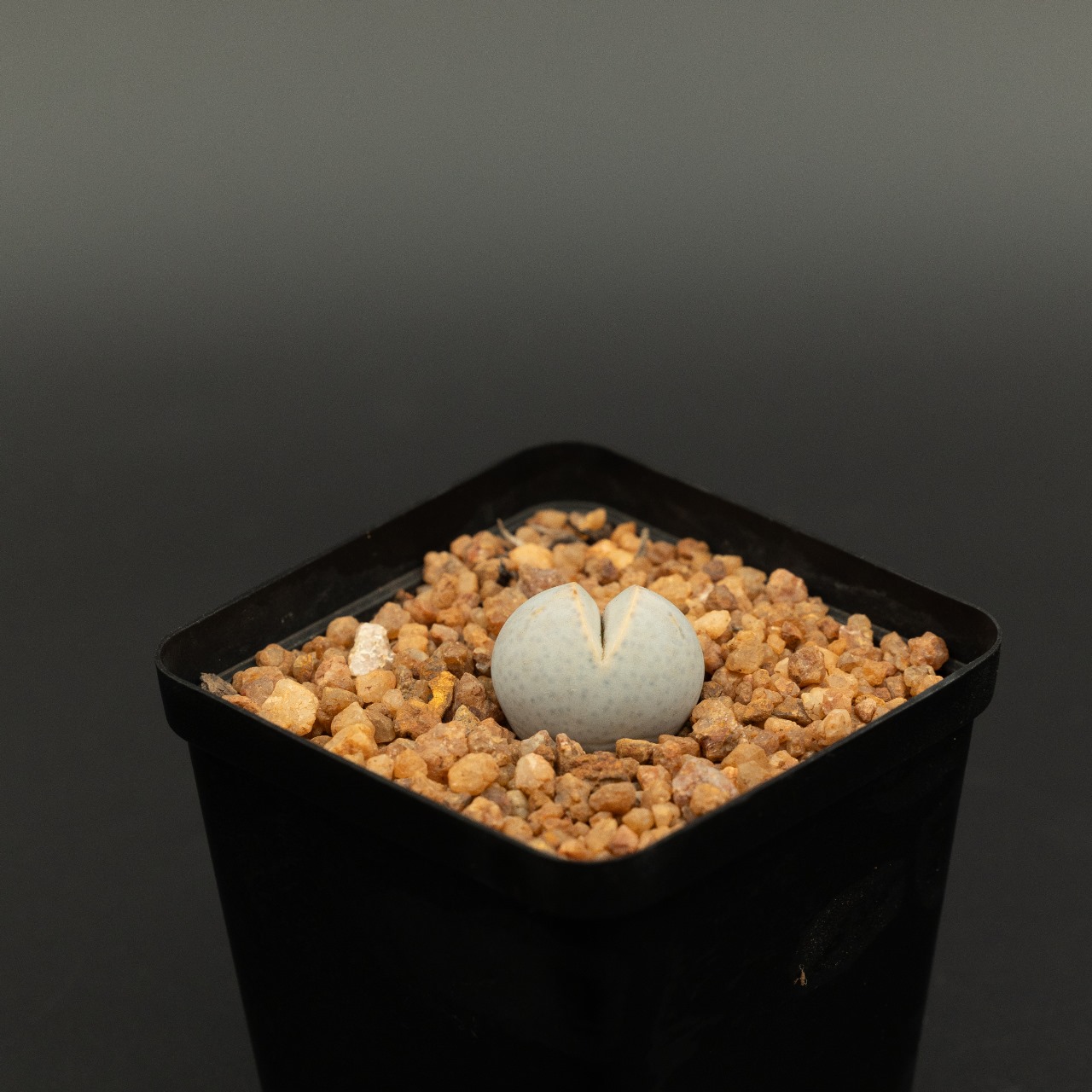
Dinteranthus wilmotianus is a unique and stunning succulent from the Aizoaceae family, prized for its unusual, paired, fleshy leaves that resemble small, green stones. Native to the dry, rocky regions of South Africa, this hardy plant thrives in well-drained soil and bright sunlight, making it perfect for collectors or succulent enthusiasts looking for something rare and intriguing. In late fall to winter, Dinteranthus wilmotianus produces striking, daisy-like flowers in shades of yellow, adding a vibrant contrast to its stone-like foliage. Its distinctive appearance, seasonal bloom, and resilience to drought make it a standout in any succulent collection, offering both beauty and low-maintenance care!
R59,00
Dinteranthus wilmotianus - The Wilmot's Living Stone
Dinteranthus wilmotianus is a captivating, stone-like succulent in the Aizoaceae family, similar to other members of the Dinteranthus genus in its incredible camouflage ability. This species resembles small rocks or pebbles, allowing it to blend seamlessly into its natural desert environment. It is a slow-growing and highly drought-tolerant plant, prized by collectors for its unique, inconspicuous form and low-maintenance requirements.
Common Characteristics
- Compact, Fused Leaves: Dinteranthus wilmotianus consists of a single pair of thick, fleshy, fused leaves with a central cleft. The plant stays compact and remains relatively small, which makes it suitable for small spaces.
- Grayish to Bluish Coloration: The leaves are often grayish-blue or light gray, with mottling or faint speckling. This muted coloration helps it blend into the rocky terrain of its native habitat.
- Daisy-Like Flowers: In late summer to early autumn, this species produces delicate, daisy-like flowers in hues of pale yellow or white. The flowers emerge from the central cleft and are typically larger than the plant’s body.
- Slow Growth: Like other Dinteranthus species, Dinteranthus wilmotianus grows slowly, and its compact, clumping nature allows it to thrive in limited spaces for long periods.
Native Habitat and Origins
Dinteranthus wilmotianus is native to the dry, rocky regions of South Africa, particularly in the Northern Cape Province. This environment is characterized by high sunlight exposure, sandy soils, and minimal rainfall, creating a harsh climate to which this species has uniquely adapted. The plant’s stone-like appearance provides camouflage and helps prevent moisture loss in the arid desert.
Care Guide for Dinteranthus wilmotianus
To successfully care for Dinteranthus wilmotianus, it’s essential to mimic the conditions of its native habitat:
- Soil: Use a well-draining, sandy soil mix, such as a cactus or succulent mix with added grit or pumice. This ensures that the plant’s roots are not exposed to prolonged moisture.
- Watering: Water sparingly, as overwatering can cause root rot. During its active growing season (late summer to early autumn), water only when the soil is completely dry. During winter dormancy, keep the plant almost dry, as it draws on stored moisture.
- Light: Provide bright, direct sunlight. Dinteranthus wilmotianus thrives in intense sunlight, which helps it maintain its compact shape and healthy coloration. A south-facing windowsill or a well-lit greenhouse is ideal.
- Temperature: This species can tolerate temperature fluctuations, including occasional near-freezing conditions. However, it should be protected from frost by bringing it indoors during colder months.
- Fertilization: Fertilization is typically unnecessary. If desired, use a diluted, low-nitrogen fertilizer in late summer, but apply sparingly.
A Unique Feature: Desert Survival Through Mimicry
One of the most unique aspects of Dinteranthus wilmotianus is its remarkable camouflage, allowing it to blend into its rocky surroundings to evade predators and minimize water loss. Its stone-like appearance is a masterful example of desert survival, making it a conversation piece in any succulent collection and a testament to the adaptations plants can make to survive in the world’s harshest environments.
Additional information
| Weight | 250 g |
|---|---|
| Dimensions | 10 × 10 × 12 cm |
Reviews
There are no reviews yet.