
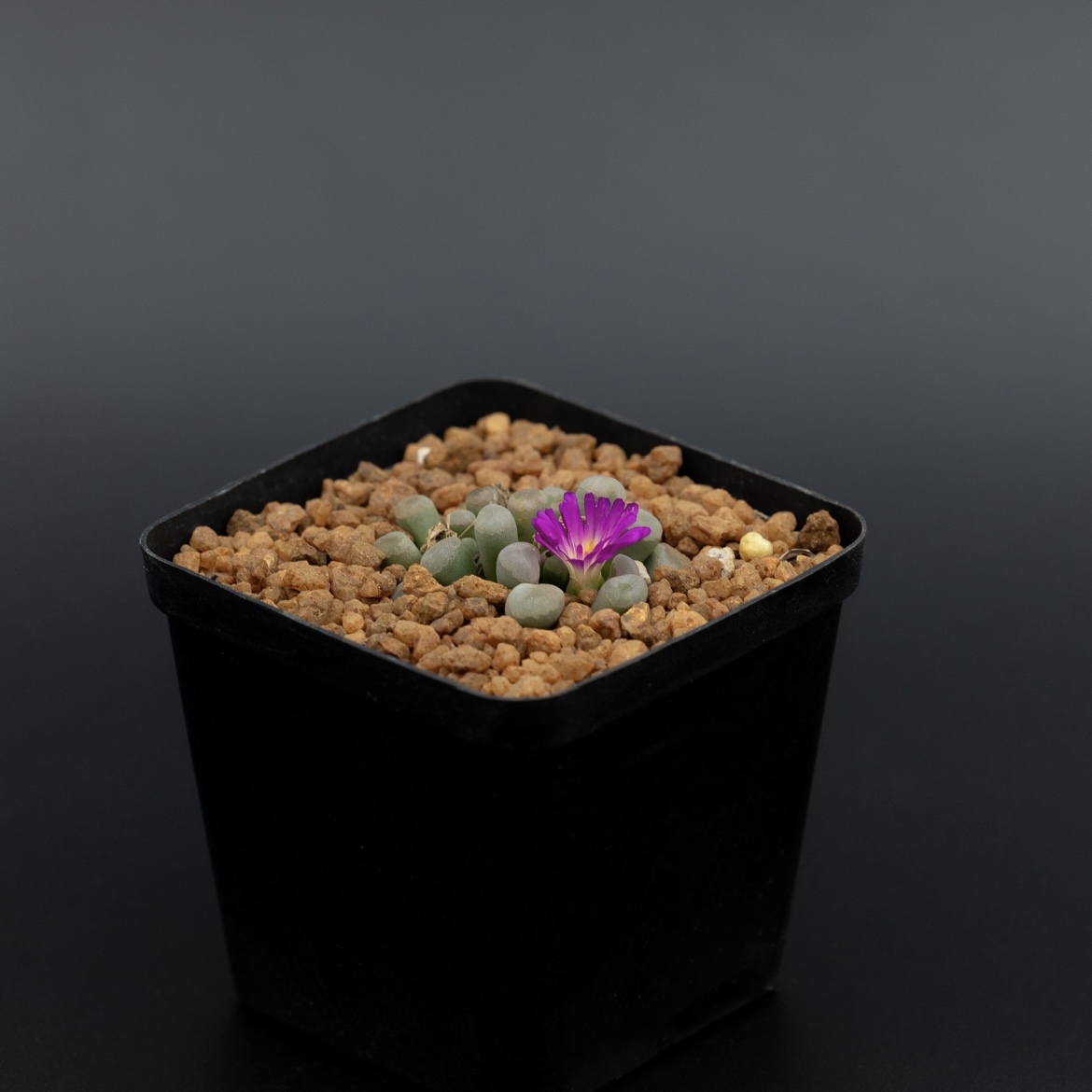
Frithia pulchra, commonly known as Fairy Elephants’ Feet, is a fascinating and unique succulent from the Aizoaceae family, often mistaken for Fenestraria rhopalophylla (Baby Toes) due to its similar appearance. Native to South Africa, this plant features small, translucent, elephant-foot-shaped leaves that cluster together in rosettes. The tips of the leaves are slightly translucent, allowing light to penetrate, which is essential for photosynthesis in its natural, sun-drenched environment. Frithia pulchra is a low-maintenance, drought-tolerant plant that thrives in well-drained soil and full sunlight. In late winter to spring, it produces charming, white to pale pink, daisy-like flowers that add a delicate touch to its whimsical appearance. With its unique form, vibrant blooms, and easy-care nature, Fairy Elephants’ Feet is a must-have for succulent collectors and lovers of rare plants!
R59,00
Frithia pulchra - “Fairy Elephant’s Feet”
Frithia pulchra, commonly called “Fairy Elephant’s Feet” or “Window Plant,” is a small, striking succulent from the Aizoaceae family. Known for its colorful flowers and unique leaf structure, Frithia pulchra is a favorite among succulent enthusiasts. The plant’s ability to grow partially submerged in soil with only its leaf tips visible makes it both unusual and appealing.
Common Characteristics
- Leaves: This plant has fleshy, tubular leaves that end in translucent, flat tips called “windows.” These windows allow light to enter for photosynthesis, even when the plant is buried up to its leaf tips in soil.
- Growth Form: Frithia pulchra forms low, compact mats of small, cylindrical leaves that grow in clusters. The plant typically remains under 4 inches in height.
- Flowers: It produces vibrant, daisy-like flowers in shades of pink, purple, or magenta with white centers. These blooms typically appear in late spring or summer, adding a bright pop of color to the plant’s muted green leaves.
Native Habitat and Origins
Frithia pulchra is native to the rocky grasslands of Gauteng Province in South Africa. In the wild, it thrives in shallow, sandy soil pockets within rock crevices, where it receives intense sunlight and very little rainfall. The plant’s leaves often remain partially buried in soil to protect it from harsh sunlight and to conserve moisture, while the windows in the leaf tips allow it to absorb light.
Care Guide for Frithia pulchra
Caring for Frithia pulchra involves recreating its natural habitat as closely as possible. With the right conditions, this species can be relatively low-maintenance.
- Soil: Use a gritty, well-draining cactus or succulent mix with sand or perlite. It’s essential to avoid moisture retention, as Frithia pulchra is prone to root rot.
- Watering: Water sparingly, and allow the soil to dry out completely between waterings. Water more regularly during the growing season (spring and summer), around once every two weeks, and reduce watering in winter, only giving small amounts when leaves start to wrinkle slightly.
- Light: Provide bright, indirect light or partial sun. Morning sun or filtered light works well, as intense afternoon sunlight can cause sunburn.
- Temperature and Humidity: This plant prefers warm, dry environments and can tolerate temperatures between 60–80°F (15–27°C). Protect it from frost, as it is not frost-hardy.
- Fertilization: During the growing season, apply a diluted succulent fertilizer once a month. Avoid fertilizing in winter.
Unique Feature: Translucent Leaf Windows
One of the most special aspects of Frithia pulchra is its translucent “windows” at the top of each leaf. These leaf windows are an adaptation that allows the plant to survive while buried, helping it capture light for photosynthesis while minimizing water loss. This adaptation is a fascinating example of how desert plants have evolved to survive extreme conditions and makes Frithia pulchra a true gem in any succulent collection.
Additional information
| Weight | 250 g |
|---|---|
| Dimensions | 10 × 10 × 12 cm |
Reviews
There are no reviews yet.