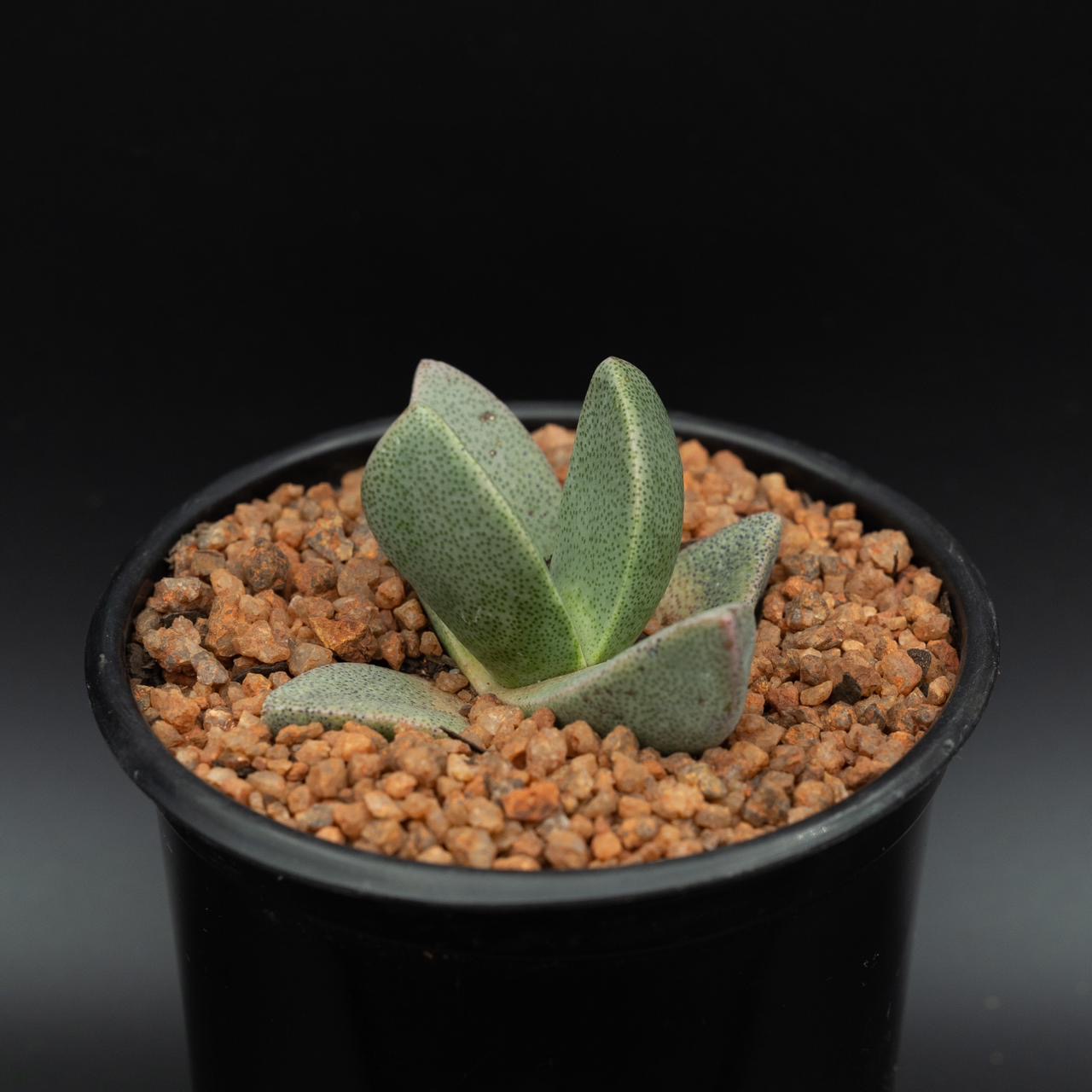
Pleiospilos bolusii, also known as a Split Rock succulent, is a rare and mesmerizing member of the Aizoaceae family, native to the dry, rocky regions of South Africa. This compact plant features thick, fleshy, gray-green leaves that grow in pairs and mimic the appearance of a stone—a clever adaptation for survival in harsh environments. Its textured surface and compact form give it a sculptural, living-stone look that makes it a standout in any collection. In late winter to early spring, Pleiospilos bolusii produces a stunning, oversized yellow to orange daisy-like flower that emerges dramatically from the center. Exceptionally drought-tolerant and easy to care for, this plant is perfect for collectors, windowsill gardens, or anyone looking to add a truly unique specimen to their succulent family.
R55,00
Species: Pleiospilos bolusii
Family: Aizoaceae
Pleiospilos bolusii, commonly known as the "Split Rock," is a fascinating succulent renowned for its mimicry of smooth stones, a trait that allows it to blend seamlessly into its natural environment. This compact, unique plant is perfect for collectors and those who appreciate low-maintenance, visually striking species.
Common Characteristics
- Growth Habit: Small, clump-forming succulent that typically consists of one or two pairs of fleshy, stone-like leaves. Over time, it can develop offsets to form small clusters.
- Leaves: Thick, gray-green to purplish leaves with rough, dotted surfaces that resemble rock textures. Each leaf pair splits at the center, allowing new growth to emerge.
- Flowers: Large, daisy-like flowers in shades of orange, yellow, or pink. Blooms typically appear in late winter to early spring and open in the afternoon, closing by evening. The flowers are often as large as the plant itself.
- Size: Typically grows up to 8 cm (3 inches) in height and width, making it a compact addition to indoor or outdoor gardens.
Native Habitat and Origins
Pleiospilos bolusii is native to the arid regions of South Africa, particularly the Karoo and other semi-desert areas. It thrives in rocky habitats where its stone-like appearance provides camouflage from herbivores.
Care Guide for Pleiospilos bolusii
- Light: Requires bright, indirect light or full sun. Insufficient light can cause leggy growth and dull coloration.
- Watering: Water sparingly. Allow the soil to dry out completely between waterings. Overwatering can lead to rot, especially during its dormant period (summer).
- Soil: Use a well-draining succulent or cactus mix. Adding coarse sand or grit can improve drainage.
- Temperature: Prefers warm temperatures and is hardy in USDA zones 9-11. Protect from frost or prolonged cold conditions.
- Fertilizer: Feed lightly during the active growing season (fall and spring) with a diluted succulent fertilizer. Avoid fertilizing during dormancy.
- Propagation: Propagate through seeds or by carefully separating offsets. Ensure cut sections are allowed to callous before planting.
- Repotting: Repot infrequently, only when the plant has outgrown its container or needs fresh soil.
Unique and Special Feature
The most extraordinary feature of Pleiospilos bolusii is its stone-like appearance, a remarkable example of natural mimicry that allows it to evade herbivores in the wild. Additionally, its oversized flowers, which can be almost as wide as the plant itself, are not only visually stunning but also emit a subtle fragrance. This species exemplifies the beauty and ingenuity of desert plant adaptation, making it a standout in any collection.
Additional information
| Weight | 250 g |
|---|---|
| Dimensions | 10 × 10 × 12 cm |
Reviews
There are no reviews yet.